Showing posts with label Iris. Show all posts

Tuesday, May 15, 2012

Flower Power: GBBD May 2012

Sponsored by May Dream Gardens

Established Plants

Rock Rose (Pavonia lasiopetala)

 Pink Rain Lily (Zephyranthes rosea)

 Mexican Honeysuckle (Justicia spicigera)

White Shamrock (Oxalis crassipes 'Alba')

 Pink Shamrock (Oxalis crassipes 'Rosea')

Lily of the Nile (Agapanthus africanus)

 Oakleaf Hydrangea 'Alice' (Hydrangea quercifolia 'Alice')

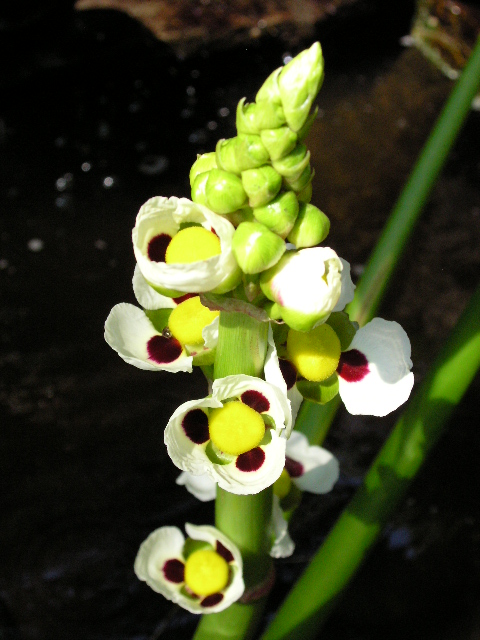
 Aztec Arrowhead (Sagittaria montevidensis)

Red Yucca's (Hesperaloe parviflora)

Wall Iris (Iris tectorum)

Crinum (species unknown)

Potted Plants

Peanut Cactus (Echinopsis chamaecereus)

 Ground Orchid (Spathoglottis plicata)

Annuals


Indoor Plants

Moth Orchid (Phalaenopsis sp.)

Sunday, May 8, 2011

Been A While

Time in the April garden seemed to sneak by without me.  Except for snipping Live Oak root sprouts, my activity during this typically nice gardening period was limited.  A busy personal schedule, drought conditions and early high temperatures conspired to keep me from accomplishing much - both in the yard and in the blog.

But there have been some stirrings in the garden.  Recent minor rains at least got the Pink Rain Lilies (Zephyranthes rosea) perked up.  A single specimen produced a nice blossom...

...with a larger patch holding the promise of additional blooms.

Planted in February, the Wall Iris (Iris tectorum) started producing its exotic blooms.  However, the flower stalks tend to sprawl - falling off to the side.  Thus the blooms are not visible unless standing directly beside the plant.

A couple of potted plants are showing some color.  The Orange Kaffir Lily (Clivia miniata) has been pretty reliable - producing a stalk of brilliant orange blooms every year.

My only "typical" cactus, the Peanut Cactus (Echinopsis chamaecereus) is topped by a single red flower.  The bloom does not last long, and only occurs sporadically - so its always a nice surprise when it blossoms.

Nearly a month before, during a tour of Pam Penick's garden (of Digging fame), I saw her Pittosporum Creme De Mint (Pittosporum tobira 'Shima') had already started producing significant new foliage.  Needless to say, my worry level skyrocketed - as mine was just sitting there.  And continued to do so as the weeks crept past.  But with a sigh of relief, I can report that mine finally started producing bright green new growth.

After a brief respite, temperatures are again climbing.  The drought continues.  And the garden persists.

Saturday, February 19, 2011

Confessions of a New Garden Blogger

A little over a year ago, on February 16, 2010, I wrote my very first blog posting for The Lazy Shady Gardener.  This was all unexplored and unknown territory for me as just a month earlier, I had never even read a blog posting of any kind.  As the year progressed and my journey continued, I jotted down several facets of garden blogging that crossed my mind.


Learning
  1. Etiquette: Initially I didn't know what the accepted protocols were for any aspect of blogging.  Should you reply back to every comment or only to questions?  It appears some reply back to all, and some don't reply to any.  I certainly didn't want to accidentally be rude to someone.  This is but one example of the questions I had, and there seemed to be no source for ready answers.  Eventually, it occurred to me that one should simply go with what one felt comfortable doing - and hope that visitors would understand.
  2. Blotanical: This one site likely had the greatest initial impact on my garden blogging experience.  Without it, I'm not sure I would have as easily discovered my local gardening community or would have developed the contacts that have guided me in my endeavors.  Though I have utilized its aspects less as the year progressed, its impact in the beginning can not be overtstated.
  3. Photography: My initial garden blog postings tended to be predominantly text, typically accompanied by small photographs.  But after viewing many other blogs, and examining ones I highly respected, it quickly became apparent that a picture really is worth a thousand words.  I concluded that a garden blog without pictures is like a garden without flowers - visitors want the shared information, but they also need to see.
  4. Memes: I did not even know that scheduled blog activities (Garden Blogger's Bloom Day, Foliage Follow-up, Picture This, etc.) existed until I saw them on other people's garden blogs.  I quickly found that I had to be selective in my participation as these activities could easily consume my entire blogging energy.  But the one discovery that participation brought to me was the way these activities helped one to "see" their garden; to actually view it through a fresh set of eyes. (A good list of garden-related memes can be found at Gardening Gone Wild: Memes and Contests for Garden Bloggers)


Fears
  1. Inadequacy: When I started blogging, I also started reading other garden blogs - and this quickly led me to wonder: What the hell am I doing wrong?  It seemed that everyone's garden was magnificent, and the gardeners so knowledgeable.  Even their blogs looked snazzy.  Everything about my gardening experience seemed dull & shoddy in comparison.  It is easy to quickly become intimidated and overwhelmed when one begins a garden blog.
  2. Vulnerability: Posting one's trials and tribulations for all to read, and showing pictures of one's garden certainly makes one feel "exposed".  When I view my garden, my eyes tend to gravitate to the empty spaces, the struggling plants, the work not yet completed.  And now I'm supposed to post pictures of this for all to see?  Garden blogging requires that one allow oneself to be vulnerable to the eyes and opinions of others - and that is no easy task.


Benefits
  1. Discovery: Blogging has allowed me to see what others are thinking & doing, to see their creativity and design.  Because of this, I have been able to look at my own garden areas with fresh eyes and new ideas.  None of us can think of everything.  And we certainly don't have time to be reinventing the wheel.  Participating in the garden blogging community has helped me to expand boundaries and overcome obstacles.
  2. Sharing: I am no longer alone.  When I have a problem, there are individuals out there who can point me to the solution.  When I can't identify a plant, another will readily provide not only its name but information about its cultivation.  Nearby gardeners (discovered through their blogs) have shared information about nursery sales, provided tours of their gardens and gifted me with pass-along plants.  The camaraderie I have discovered through garden blogging has made the entire gardening experience even more enjoyable.


Purpose
  1. Responsibility: Oh my goodness...people that are not even related to me are reading my garden blog.  What do they want, why are they here, who are these people?  Discovering that your blog has followers is quite inspiring.  And eventually, you begin to feel a responsibility to them, to provide something of value for the time they take in visiting your postings.  It is, of course, a balancing act as blogging is likely not the only responsibility with which one is dealing.  But once your blog has followers (even just a few), one feels pressure to produce.
  2. Reason: At times, that responsibility can take what was initially an enjoyable activity and turn it into a tiresome chore.  And that is when one needs to revisit the primary purpose which led them to garden blogging.  What was it that drove the blogger to begin?  I think it is important that we occasionally return to that question.  For me, it was primarily a digital method for replacing my hand-written gardening notebooks - which never seemed to quite work because they were always so hard to search.  It has, of course, evolved beyond that - but at its heart, it is as the banner says: a diary of my shady garden.
Everyone's blogging journey is uniquely their own.  Each will have experienced their own lessons and challenges.  On my blogging anniversary, I wanted to share those that had impacted me the most during this first year.  And I'd love to hear what you have discovered as you've traveled along your own path.

Planted in the Ground:
  • Wall Iris (Iris tectorum): Was on my Gotta Get list; planted a one-gallon and two 4"; have an additional two 4" that I'm holding on to as possible replacements for my Ground Orchids (Spathoglottis plicata) (just in case they don't recover from the winter's extreme lows)
  • Crimson Queen Japanese Maple (Acer palmatum var. dissectum 'Crimson Queen'): This will be my second attempt at a Japanese Maple and my first at planting one in the ground.  Had decided that they were too much trouble for my garden, but after seeing pictures of them in other Austin gardens - I just had to try again.

Monday, February 7, 2011

Unprotected Results

I previously reported on the protected plants and the results of our prolonged freeze here in central Texas.  Now its time to examine the plants that received no protection which showed damage or which looked bad but appear to be recovering.

The Gold Dust Plants (Aucuba japonica 'Variegata') originally looked quite sad, but after a couple days of warmth, they have completely recovered.

The potted Bear's Breech (Acanthus 'Summer Beauty') initially looked sad, and now...well...sad doesn't even begin to describe its condition.  Will have to see if it recovers from the roots (presently, I am hopeful).

The Formosa Red Azalea (Azalea indica 'Formosa Red') has also bounced back looking no worse for the exposure.  I had though it should be able to handle the conditions, but its droopy look a couple of days ago had me worried.

No surprise here.  I had not anticipated the Palm Grass (Setaria palmifolia) foliage to make it through even our regular winter lows.  The plan was for it to return from roots - now I'll just have to wait and see.

The Coral Bells 'Caramel' (Heuchera villosa 'Caramel') looked a little tired, but is another that bounced back strong once the temperatures warmed up.  I had suspected that this plant should be able to handle the lows, but since it is new to my garden, there is always doubt.

Another new plant to the garden is the Butterfly Iris (Iris 'nada').  It has handled all previous freezes without showing any damage (even putting on some new growth during the warmer spells).  But it also was one that looked rather sad - but it has bounced back with only some minor damage.

The forgotten Gasteraloe 'Midnight' (meant to cover it - though I'm thinking it would not have made a difference) might look healthy in the picture, but every piece of green is soft and mushy.  I'm afraid it may be a complete loss.

I have never protected my Manfreda 'Macho Mocha' (Manfreda x Mangave 'Macho Mocha') (even during last year's 18 degree lows), but they certainly got hurt by the extreme length of this winter's cold exposure.  Much of the plant  is soft and mushy - can't yet tell if the center is still firm.  Time will tell.

The Variegated Flax Lilies (Dianella tasmanica 'Variegata'), another plant that can handle our typical Central Texas lows, has certainly been knocked back to its roots (much like last year).   But it should return.

Blooming just days prior to the serious freeze, the Variegated Abutilons (Abutilon pictum 'Thompsonii') & Marilyn's Choice Abutilon all have freeze-dried leaves (and blossoms).  As  this is my first winter with the Abutilons, I will have to wait and see if they return from the above-ground stems, the roots or even at all.

With day after day of below freezing temperatures, the Texas Gold Columbine (Aquilegia chrysantha var. hinckleyana) had finally laid flat on the ground.  But with warmer temperatures, it has begin to look much healthier.

Two of the garden's three Friendship Plants (Billbergia nutans) were left to fend for themselves without protection in the cold temperatures.  It is really difficult to tell the condition of the plant.  It isn't soft or mushy, nor has its color faded or darkened.  Will have to give it time to see the effects.

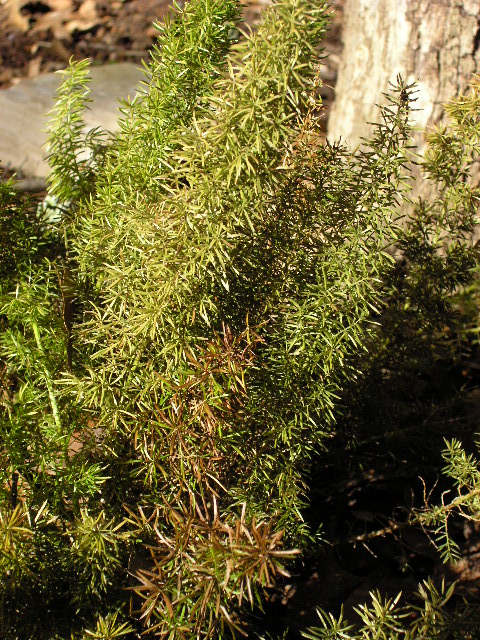
Of the two Foxtail Ferns (Asparagus densiflorus 'Meyersii'), one is potted and one is in the ground.  The protected potted one received minor damage whereas the unprotected soil-based one certainly has more of its stems showing the tell-tale brownish tint that likely will lead to that portion being lost.  But the plant should pull through.

Last year's 18 degree low hammered the Lily of the Nile (Agapanthus africanus) almost completely back to its roots.  So this years lengthy freeze (and 17 degree low) will certainly cause a repeat of last year's results.

Also a repeat low temperature victim is the Pink Rain Lilies (Zephyranthes rosea).  Their foliage typically withstand lows in the mid-20s, but temperatures in the teens lead it to lose everything above ground.  But spring should see it sprouting once again.

A couple of others that appeared a little upset with the cold, but have survived with only minimal damage include Joe Pye Shrub & Cast Iron Plants (Aspidistra elatior).

Of course, there are several other plants that did as expected.  Evergreens continued on in their foliar ways.  Deciduous plants had lost their leaves long ago.  The usual perennial culprits disappeared back into the ground, but will return with the spring.  Likely, some that presently appear undamaged will begin to show signs as the months progress, and others that looked to have received mortal blows will bounce back.

For now, its a waiting game.

Sunday, November 7, 2010

Cyclamens

For winter color, I've decided to try Cyclamens (Cyclamen persicum) in my front yard, three-tiered bed.  My beds tend to be too shady for pansies, violas or ornamental kale/cabbage.  But on a recent episode of Central Texas Gardener, they mentioned that Cyclamens can handle shade.


To prepare the beds, I removed the existing Begonias (Begonia x semperflorens-cultorum) and then used a garden fork to break up the dirt.  Then, as I came across them, I pulled as many of the oak root sprouts as I could (which was a lot!).  Next, I added some peat moss to enrich the soil and some decomposed granite to keep it loose.  Afterwards, I worked in a generous amount of compost to give the annuals a good boost.


Finally, I planted a mixture of lighter and darker pink shades in the two lower tiers.


Though I planted 20 Cyclamens, I'm thinking I need a couple of more of the plants (darn - another trip to the store).  Hopefully, as they grow, they'll fill in the beds with some good winter color.


Gotta Get:
  • Japanese Root Iris (Iris tectorum): Have considered it for quite a while; finally decided it was one I wanted in my garden.
  • Pittosporum Creme De Mint (Pittosporum tobira 'Shima'): As this variety only grows a little over two foot is size, I'm think having one in a sunnier spot would be great (of course, "sunnier" is very relative in my garden).
  • Golden Oakleaf Hydrangea (Hydrangea quercifolia 'Little Honey'): Have just started playing with the Oakleaf Hydrangeas by having the variety 'Alice' planted.  Really like the chartreuse colored leaves on this 'Little Honey' variety, plus the fact that it tends to be somewhat smaller than many of the other varieties.

Sunday, October 24, 2010

Stepping Stones

It seems to happen almost every time.  I have either a new plant or an existing one in need of a new home.  Nothing simpler, right?  Get out the garden fork, perhaps a shovel, and simply prepare a spot for it.

And that's when the adventure begins.

On a recent excavation for a transplanted White Margin Snow Rose (Serissa foetida 'Improved'), I quickly hit stone.  As usual, this led to the rock bar becoming involved.  In this case, I removed a nice triangular limestone flagstone measuring almost 3 foot on the long side.


Thank goodness I got that out of the way.  But what's this?  Yet another rock.  And it appears to be even larger.  After some sweating, a second, even larger, stepping stone was produced.


This one measured approximately three foot by three foot.


Well, at least it gives me an additional step (or two) for the path that I've been working on.


Planted in the Ground:
  • Butterfly Iris (Iris 'nada'): The plant was on my investigate list, but when I discovered it on sale, I went ahead bought it.  Now I learn that it may want more water than I'm willing to supply.  Planted near my pond and time will tell.
  • Bella Red Abutilon (Abutilon x hybridum 'Bella Red'): One of my Gotta Get listings; recommended by Central Texas Gardener; I'm a little worried about freeze tolerance.
  • Reifler's Dwarf Viburnum (Viburnum obovatum 'Reifler Dwarf'): Decided I had it planted it too close to a path; presently its size was fine, but mature size was going to be too large; so moved further back in the garden.  Plus I wanted to make room for the next plant.
  • Pale Pavonia (Pavonia hastata): Has been on my Gotta Get list since seeing several area blogs mention it; now I have two.  One went into the bed near the pond; the other went into the Viburnum's old location.
  • Variegated Mondo Grass (Ophiopogon jaburan 'Vitattus'): Have three that are doing quite well at the base of some trees, but had three others near the pond that seemed to be struggling.  Transplanted the struggling ones over next to the happy ones (obviously they like something over there!).
  • Milky Way Cast Iron Plant (Aspidistra lurida 'Milky Way'): Transplanted two towards the back of the bed into the locale vacated by the Variegated Mondo Grass.
    Planted in Pots: