Digging hosts Foliage Follow-up on the sixteenth of every month so that the foliar aspects of our garden have their chance to shine. For this posting, I decided to concentrate on some of the more recent additions to my garden.
Planted last fall, this will be the first spring for the Oakleaf Hydrangea 'Alice' (Hydrangea quercifolia 'Alice'). It never completely lost all of its leaves, but is certainly putting out plenty of new growth.
Crimson Queen Japanese Maple (Acer palmatum var. dissectum 'Crimson Queen') is the first Maple I have ever tried planting directly into the ground. Its unfolding red leaves are very nice; I hope it establishes itself.
When purchased, this Manfreda didn't have a species name. It died back completely in winter, but is now emerging with nicely spotted foliage. Suspect it might be a Rattlesnake Agave (Manfreda maculosa), but I think it may grow a little larger than is the norm for that variety (if anyone can identify, please let me know).
The foliage of the Coral Bells 'Caramel' (Heuchera villosa 'Caramel') has a wide range of shades - from green to red. The new growth has the redder colors whereas the older leaves stay green. Very impressive coloration.
Have always enjoyed the strongly-patterned initial leaf coloration of the Lyreleaf Sage (Salvia lyrata). It eventually tends to fade back towards a solid green, but that first production of leaves is very nice.
With a diminutive bloom at its center, the Red Billbergia's (Billbergia sp. 'Red') foliage is the primary reason to add it to one's garden.
Be sure to visit Digging to see other Foliage Follow-up postings.
Showing posts with label Heuchera. Show all posts
Wednesday, March 16, 2011
Monday, February 7, 2011
Unprotected Results
I previously reported on the protected plants and the results of our prolonged freeze here in central Texas. Now its time to examine the plants that received no protection which showed damage or which looked bad but appear to be recovering.
The Gold Dust Plants (Aucuba japonica 'Variegata') originally looked quite sad, but after a couple days of warmth, they have completely recovered.
The potted Bear's Breech (Acanthus 'Summer Beauty') initially looked sad, and now...well...sad doesn't even begin to describe its condition. Will have to see if it recovers from the roots (presently, I am hopeful).
The Formosa Red Azalea (Azalea indica 'Formosa Red') has also bounced back looking no worse for the exposure. I had though it should be able to handle the conditions, but its droopy look a couple of days ago had me worried.
No surprise here. I had not anticipated the Palm Grass (Setaria palmifolia) foliage to make it through even our regular winter lows. The plan was for it to return from roots - now I'll just have to wait and see.
The Coral Bells 'Caramel' (Heuchera villosa 'Caramel') looked a little tired, but is another that bounced back strong once the temperatures warmed up. I had suspected that this plant should be able to handle the lows, but since it is new to my garden, there is always doubt.
Another new plant to the garden is the Butterfly Iris (Iris 'nada'). It has handled all previous freezes without showing any damage (even putting on some new growth during the warmer spells). But it also was one that looked rather sad - but it has bounced back with only some minor damage.
The forgotten Gasteraloe 'Midnight' (meant to cover it - though I'm thinking it would not have made a difference) might look healthy in the picture, but every piece of green is soft and mushy. I'm afraid it may be a complete loss.
I have never protected my Manfreda 'Macho Mocha' (Manfreda x Mangave 'Macho Mocha') (even during last year's 18 degree lows), but they certainly got hurt by the extreme length of this winter's cold exposure. Much of the plant is soft and mushy - can't yet tell if the center is still firm. Time will tell.
The Variegated Flax Lilies (Dianella tasmanica 'Variegata'), another plant that can handle our typical Central Texas lows, has certainly been knocked back to its roots (much like last year). But it should return.
Blooming just days prior to the serious freeze, the Variegated Abutilons (Abutilon pictum 'Thompsonii') & Marilyn's Choice Abutilon all have freeze-dried leaves (and blossoms). As this is my first winter with the Abutilons, I will have to wait and see if they return from the above-ground stems, the roots or even at all.
With day after day of below freezing temperatures, the Texas Gold Columbine (Aquilegia chrysantha var. hinckleyana) had finally laid flat on the ground. But with warmer temperatures, it has begin to look much healthier.
Two of the garden's three Friendship Plants (Billbergia nutans) were left to fend for themselves without protection in the cold temperatures. It is really difficult to tell the condition of the plant. It isn't soft or mushy, nor has its color faded or darkened. Will have to give it time to see the effects.
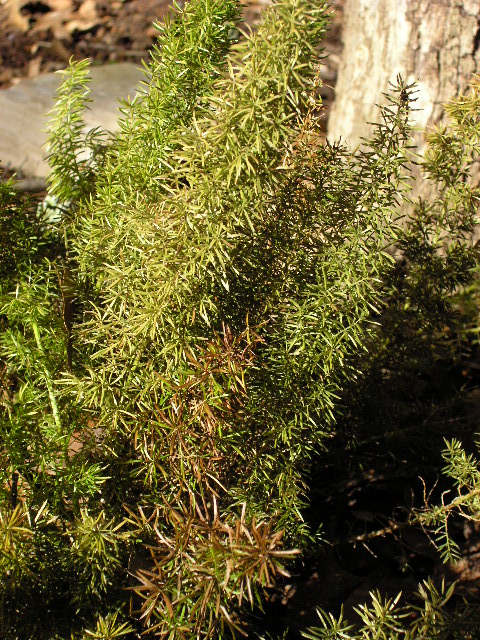
Of the two Foxtail Ferns (Asparagus densiflorus 'Meyersii'), one is potted and one is in the ground. The protected potted one received minor damage whereas the unprotected soil-based one certainly has more of its stems showing the tell-tale brownish tint that likely will lead to that portion being lost. But the plant should pull through.
Last year's 18 degree low hammered the Lily of the Nile (Agapanthus africanus) almost completely back to its roots. So this years lengthy freeze (and 17 degree low) will certainly cause a repeat of last year's results.
Also a repeat low temperature victim is the Pink Rain Lilies (Zephyranthes rosea). Their foliage typically withstand lows in the mid-20s, but temperatures in the teens lead it to lose everything above ground. But spring should see it sprouting once again.
A couple of others that appeared a little upset with the cold, but have survived with only minimal damage include Joe Pye Shrub & Cast Iron Plants (Aspidistra elatior).
Of course, there are several other plants that did as expected. Evergreens continued on in their foliar ways. Deciduous plants had lost their leaves long ago. The usual perennial culprits disappeared back into the ground, but will return with the spring. Likely, some that presently appear undamaged will begin to show signs as the months progress, and others that looked to have received mortal blows will bounce back.
For now, its a waiting game.
The Gold Dust Plants (Aucuba japonica 'Variegata') originally looked quite sad, but after a couple days of warmth, they have completely recovered.
The potted Bear's Breech (Acanthus 'Summer Beauty') initially looked sad, and now...well...sad doesn't even begin to describe its condition. Will have to see if it recovers from the roots (presently, I am hopeful).
The Formosa Red Azalea (Azalea indica 'Formosa Red') has also bounced back looking no worse for the exposure. I had though it should be able to handle the conditions, but its droopy look a couple of days ago had me worried.
No surprise here. I had not anticipated the Palm Grass (Setaria palmifolia) foliage to make it through even our regular winter lows. The plan was for it to return from roots - now I'll just have to wait and see.
The Coral Bells 'Caramel' (Heuchera villosa 'Caramel') looked a little tired, but is another that bounced back strong once the temperatures warmed up. I had suspected that this plant should be able to handle the lows, but since it is new to my garden, there is always doubt.
Another new plant to the garden is the Butterfly Iris (Iris 'nada'). It has handled all previous freezes without showing any damage (even putting on some new growth during the warmer spells). But it also was one that looked rather sad - but it has bounced back with only some minor damage.
The forgotten Gasteraloe 'Midnight' (meant to cover it - though I'm thinking it would not have made a difference) might look healthy in the picture, but every piece of green is soft and mushy. I'm afraid it may be a complete loss.
I have never protected my Manfreda 'Macho Mocha' (Manfreda x Mangave 'Macho Mocha') (even during last year's 18 degree lows), but they certainly got hurt by the extreme length of this winter's cold exposure. Much of the plant is soft and mushy - can't yet tell if the center is still firm. Time will tell.
The Variegated Flax Lilies (Dianella tasmanica 'Variegata'), another plant that can handle our typical Central Texas lows, has certainly been knocked back to its roots (much like last year). But it should return.
Blooming just days prior to the serious freeze, the Variegated Abutilons (Abutilon pictum 'Thompsonii') & Marilyn's Choice Abutilon all have freeze-dried leaves (and blossoms). As this is my first winter with the Abutilons, I will have to wait and see if they return from the above-ground stems, the roots or even at all.
With day after day of below freezing temperatures, the Texas Gold Columbine (Aquilegia chrysantha var. hinckleyana) had finally laid flat on the ground. But with warmer temperatures, it has begin to look much healthier.
Two of the garden's three Friendship Plants (Billbergia nutans) were left to fend for themselves without protection in the cold temperatures. It is really difficult to tell the condition of the plant. It isn't soft or mushy, nor has its color faded or darkened. Will have to give it time to see the effects.
Of the two Foxtail Ferns (Asparagus densiflorus 'Meyersii'), one is potted and one is in the ground. The protected potted one received minor damage whereas the unprotected soil-based one certainly has more of its stems showing the tell-tale brownish tint that likely will lead to that portion being lost. But the plant should pull through.
Last year's 18 degree low hammered the Lily of the Nile (Agapanthus africanus) almost completely back to its roots. So this years lengthy freeze (and 17 degree low) will certainly cause a repeat of last year's results.
Also a repeat low temperature victim is the Pink Rain Lilies (Zephyranthes rosea). Their foliage typically withstand lows in the mid-20s, but temperatures in the teens lead it to lose everything above ground. But spring should see it sprouting once again.
A couple of others that appeared a little upset with the cold, but have survived with only minimal damage include Joe Pye Shrub & Cast Iron Plants (Aspidistra elatior).
Of course, there are several other plants that did as expected. Evergreens continued on in their foliar ways. Deciduous plants had lost their leaves long ago. The usual perennial culprits disappeared back into the ground, but will return with the spring. Likely, some that presently appear undamaged will begin to show signs as the months progress, and others that looked to have received mortal blows will bounce back.
For now, its a waiting game.
Sunday, November 14, 2010
Let The Composting Begin
Have never really attempting the whole composting thing. Obviously, as anyone in the shade knows, I tend to have plenty of leaves available by the start of winter. In the past, I have typically mowed them up with a lawnmower, and then spread the remains about as mulch.
But have never gathered the shredded leaves in an attempt to produce compost. So this year I thought I'd at least create a temporary structure and see what this whole composting fuss was all about.
I collected some extra wood I had about along with some chicken wire.
Next I hammered the poles into the ground - not very deep cuz one usually runs into limestone pretty quick in these parts.
Then I attached the chicken wire to the poles creating a small, flimsy structure to enclose the leaves.
From what I've read, once the plant material has been gathered, composting will occur regardless of what one does. But composting does best if provided warmth, moisture, rotation and a good mixture of greens/browns.
Warmth: The recommendation is to place the compost bin in the sunshine to speed things up. Welp, that ain't happening - this is the shady garden, not the sunny one. It's my understanding this will slow things down but not stop them.
Moisture: It'll get that when it rains or the sprinkler system throws some its way - that should be sufficient.
Rotation: Hmm, that's starting to sound suspiciously like work. Maybe I'll stick a garden fork in there every once in a while and stir the pot. And maybe I won't.
Mixture: Hey, around this household, you eat what's put on your plate. There'll be some greens, but the vast majority will be brown, fallen leaves (with some yellow, fallen leaves thrown in for good measure).
We'll just have to see how this works out. Already have ideas in my head for a nice-looking, more permanent structure. But time will tell.
Planted in the Ground:
Planted in Pots:
But have never gathered the shredded leaves in an attempt to produce compost. So this year I thought I'd at least create a temporary structure and see what this whole composting fuss was all about.
I collected some extra wood I had about along with some chicken wire.
Next I hammered the poles into the ground - not very deep cuz one usually runs into limestone pretty quick in these parts.
Then I attached the chicken wire to the poles creating a small, flimsy structure to enclose the leaves.
From what I've read, once the plant material has been gathered, composting will occur regardless of what one does. But composting does best if provided warmth, moisture, rotation and a good mixture of greens/browns.
Warmth: The recommendation is to place the compost bin in the sunshine to speed things up. Welp, that ain't happening - this is the shady garden, not the sunny one. It's my understanding this will slow things down but not stop them.
Moisture: It'll get that when it rains or the sprinkler system throws some its way - that should be sufficient.
Rotation: Hmm, that's starting to sound suspiciously like work. Maybe I'll stick a garden fork in there every once in a while and stir the pot. And maybe I won't.
Mixture: Hey, around this household, you eat what's put on your plate. There'll be some greens, but the vast majority will be brown, fallen leaves (with some yellow, fallen leaves thrown in for good measure).
We'll just have to see how this works out. Already have ideas in my head for a nice-looking, more permanent structure. But time will tell.
Planted in the Ground:
- Coral Bells 'Caramel' (Heuchera villosa 'Caramel'): Has been on my Gotta Get list and finally discovered them for a fair price; placed three along my garden path. Not nearly as bronze as expected - hoping maybe its the new growth that produces that color (otherwise they may have been mislabeled - and that will make me grumpy)
Planted in Pots:
- Cyclamen (Cyclamen persicum): Added some red ones to a pot; did not realize they weren't cold-hardy here and might need some protection (well, poo).
Sunday, May 16, 2010
Foliage Follow-up: May 2010
On the sixteenth of every month, Digging hosts Foliage Follow-up so that we can explore our garden's non-flowering aspects. I have reached the conclusion that in a shady garden, it is the leaves that rule. So here are a few of my May garden leafy stand-outs.
Raspberry Ice Coral Bells (Heuchera 'Raspberry Ice') actually still has a few blooms hanging in there, but its foliage is the main show. The leaves emerge small and reddish deep within the plant, then push out and change to the nicely variegated pattern that lightens up the dappled shade area.
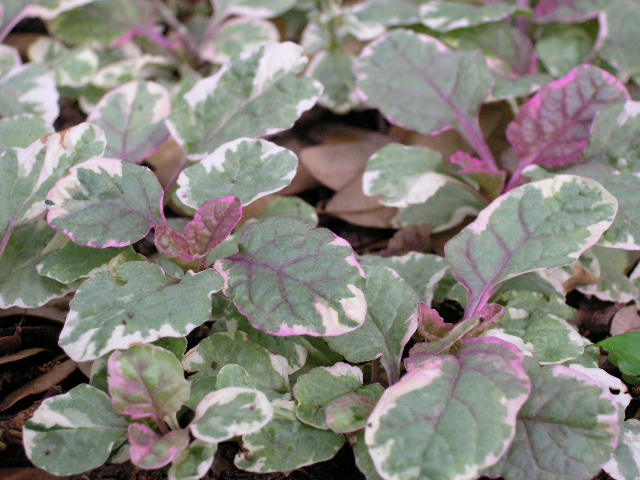
Of course, if variegation is what you desire, the Strawberry Geranium (Saxifraga stolonifera) definitely catches your attention. Spreading out like a slow moving groundcover, it has finished its bloom cycle, but still contributes to the show with its leaves.
Burgundy Glow Ajuga (Ajuga reptans 'Burgundy Glow') is another that brightens the darker areas of the shady garden. In my garden, it seems to grow much slower than regular Ajuga, gradually weaving its way in and around other larger plants but never forming thick mats. Really enjoy the lighter colors and purplish highlights.
Another bright spot in the shade is the Ghost Plant (Graptopetalum paraguayense). With a little bit of protection, it survived this winter's 18 degree lows with only minor damage. And now it is again growing, producing new leaves as it cascades out onto a nearby stone path.
Have been enjoying a new addition to this year's garden, the Agave 'Blue Glow'. Its blue-green, red-edged leaves have the typical agave attention-grabbing spine at its tip (it quickly trains you to move carefully around it). It has been producing new leaves from the center that stretch upward then fall outward to join the rosette, their tight initial growth producing patterns still etched on the newly opened leaves.
It all starts with the foliage; hope your garden's flavors of green are bringing you smiles.
Raspberry Ice Coral Bells (Heuchera 'Raspberry Ice') actually still has a few blooms hanging in there, but its foliage is the main show. The leaves emerge small and reddish deep within the plant, then push out and change to the nicely variegated pattern that lightens up the dappled shade area.
Of course, if variegation is what you desire, the Strawberry Geranium (Saxifraga stolonifera) definitely catches your attention. Spreading out like a slow moving groundcover, it has finished its bloom cycle, but still contributes to the show with its leaves.
Burgundy Glow Ajuga (Ajuga reptans 'Burgundy Glow') is another that brightens the darker areas of the shady garden. In my garden, it seems to grow much slower than regular Ajuga, gradually weaving its way in and around other larger plants but never forming thick mats. Really enjoy the lighter colors and purplish highlights.
Another bright spot in the shade is the Ghost Plant (Graptopetalum paraguayense). With a little bit of protection, it survived this winter's 18 degree lows with only minor damage. And now it is again growing, producing new leaves as it cascades out onto a nearby stone path.
Have been enjoying a new addition to this year's garden, the Agave 'Blue Glow'. Its blue-green, red-edged leaves have the typical agave attention-grabbing spine at its tip (it quickly trains you to move carefully around it). It has been producing new leaves from the center that stretch upward then fall outward to join the rosette, their tight initial growth producing patterns still etched on the newly opened leaves.
It all starts with the foliage; hope your garden's flavors of green are bringing you smiles.
Thursday, April 15, 2010
Flower Power
Woohoo! It's my first chance to participate in Garden Blogger's Bloom Day (GBBD) - I was around for last month's, but didn't even know what GBBD was until it arrived and departed. And I'm not too sure I had any blooms at that time anyway. So here's April's shady blossoms:
Plants that were present last year (and happily returned this year):
Old-fashioned Rose (potted; variety unknown; blossoms about the size of a quarter)
Cedar Sage (Salvia roemeriana)
Strawberry Geranium (Saxifraga stolonifera)
Purple Shamrock (Oxalis triangularis subsp. papilionaceae 'Atropurpurea')
Soap Aloe (Aloe maculata)
Ajuga (Ajuga reptans)
Chrysanthemum (potted)
Texas Betony (Stachys coccinea)
Rock Rose (Pavonia lasiopetala)
Banana Shrub (Michelia figo)
Raspberry Ice Coral Bells (Heuchera 'Raspberry Ice')
Gulf Coast Penstemon (Penstemon tenuis)
Plants new to the garden this year (and one hopes to see them next year):
Pink Shamrock (Oxalis crassipes 'Rosea')
White Shamrock (Oxalis crassipes 'Alba')
Annual Begonia (Begonia x semperflorens-cultorum)
Variegated Abutilon (Abutilon pictum 'Thompsonii')
Subscribe to:
Posts (Atom)